- by foxnews
- 05 Aug 2026
Haunting new images reveal the final ship where explorer Sir Ernest Shackleton died
The first close-up images reveal the remains of Quest in the Labrador Sea, where the historic shipwreck is covered with pink corals, surrounded by marine life and draped in fishing nets.
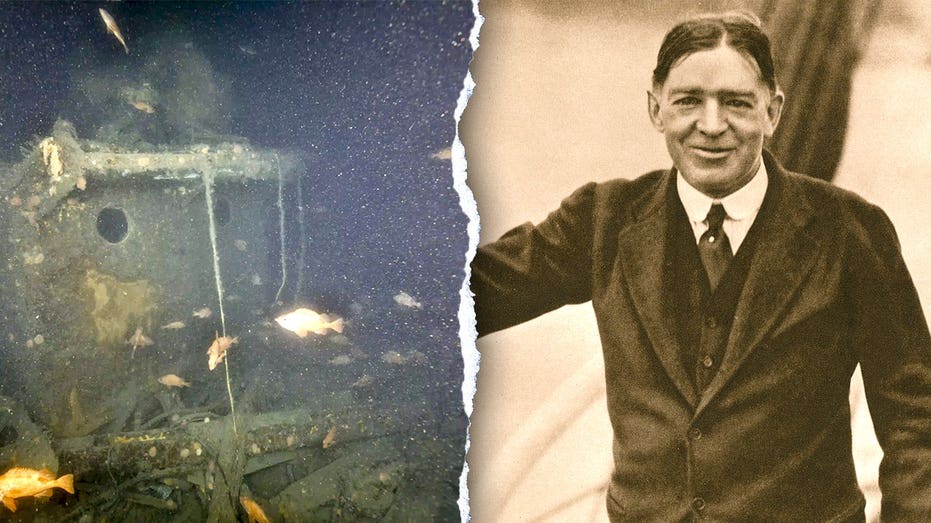
The images were taken at the ship's location in the Labrador Sea, around 1,280 feet deep in the waters off of Newfoundland and Labrador, Canada, and were released in July.
After 60 years, the vessel remains recognizable and in moderate condition, Dwight Coleman, co-chief scientist at Woods Hole Oceanographic Institution (WHOI), told Fox News Digital.
"You could tell it was a ship," he said. "It had an obvious bow and stern, rudder and propeller.
"Even though it was sort of covered in fishing nets, you could still tell that some of that structure was preserved underneath the nets."
The images show fishing nets draped across parts of the wreck, as well as parts of its metal superstructure and portholes that still remain intact.
John Geiger, CEO of the RCGS, described seeing Quest for the first time as "a moving experience."
"To see Shackleton's ship, and to think that Shackleton was standing on that deck a century ago... At first, there was a lot of darkness, but suddenly the bow emerges as you are going toward it. It's incredible," Geiger said in a press release.
The team used WHOI's Falcon ROV to image the ship and create its digital twin, as well as DSV Alvin, the iconic submersible that first visited the Titanic wreck 40 years ago. The vessels were made available through the National Science Foundation.
Coleman of WHOI, who is based in Rhode Island, said a major part of his job was creating a digital twin of the shipwreck.
The ocean scientist said he was surprised to find the wreck covered in fishing nets and teeming with marine life.
"I wasn't expecting all the fishing gear, the nets and all the fish," he said. "I was honestly thinking it was a little bit deeper and in cold water, and that it would be pretty well-preserved and free of fishing gear because I didn't think there was that much fishing up there."
Added Coleman, "Boy, was I wrong. … It was a vibrant sort of marine life ecosystem around it."
"A lot of the wood was collapsing and degrading. The wooden deck was basically completely gone," he said.
"The metal structures of the ship were still pretty well intact, although deteriorating."
Coleman said researchers hope to preserve the wreck through detailed digital mapping rather than artifact recovery.
"We understand most of the components that we could find on it, so you're not really learning anything about history by recovering the artifacts. … There really isn't much need to," he said.
"By studying them, we can bring recognition to history and oceanography," Coleman said. "These shipwrecks are now artificial reefs that support diverse sorts of biological communities."
The newly released images come not long after another Shackleton-linked discovery garnered international attention.
you may also like

- by foxnews
- 05 Aug 2026
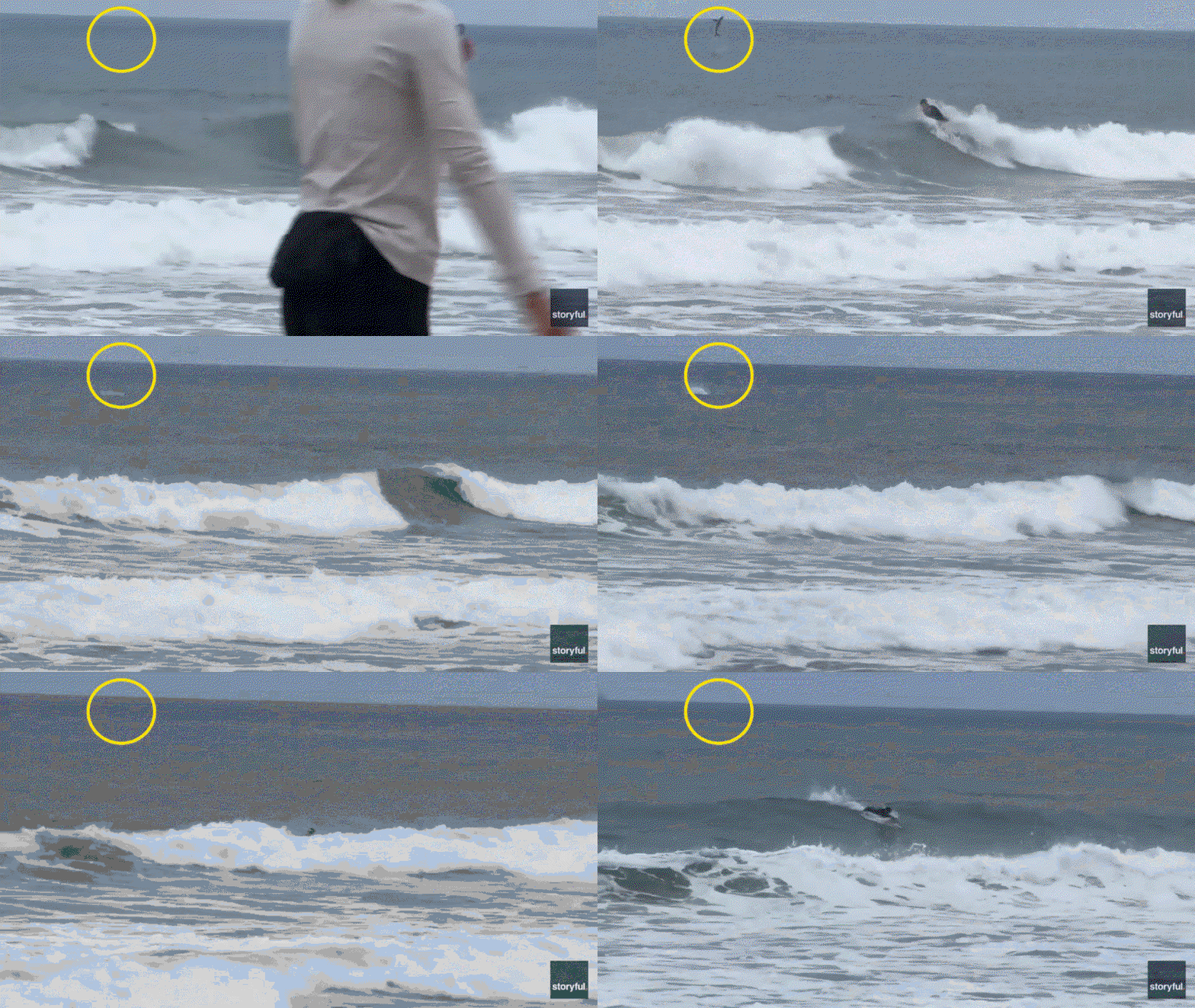
Shark Week shocker as great white breaches just yards from oblivious boogie boarder

- by foxnews
- 05 Aug 2026
Lost sermons from one of Christianity's greatest saints discovered after 1,600 years

travel
- by foxnews
- descember 09, 2016
Thousands swarm stunning mountain escape as selfie tourism backlash erupts online
Photos are showing massive shuttle lines at Tre Cime di Lavaredo in Italy as selfie tourism overwhelms one of the Dolomites' most iconic destinations for travelers.
read more