- by foxnews
- 11 Sep 2026
Warehouse robots move packages without human handoff
Ambi Robotics and Pickle Robot Company integrate trailer unloading and pallet building systems to automate warehouse loading dock operations.
- by foxnews
- 07 Jul 2026
- in technology
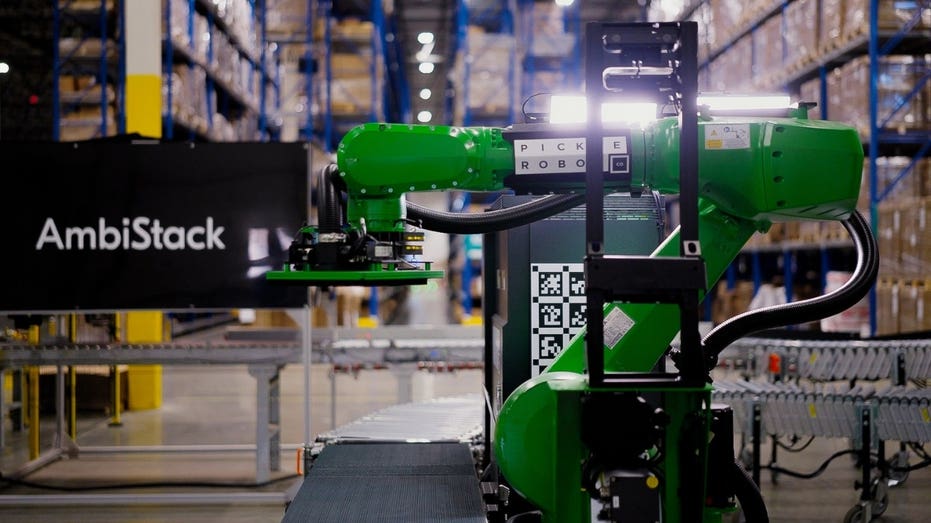
If this works well in large facilities, it points to a future where robots can handle more of the work that happens between a truck and a warehouse floor.
Sign up for my FREE CyberGuy Report
The key here is the handoff. Many warehouses already use automation. However, those systems often work in separate lanes. One machine may handle unloading. Another may handle sorting or stacking. Yet the warehouse still needs people or custom engineering to connect the pieces. This collaboration tries to make that connection smoother. The companies say the system can work with existing warehouse infrastructure. That means operators may avoid tearing apart a facility to use it.
This Ambi Robotics and Pickle Robot integration shows how that can work inside a warehouse. Pickle Robot handles the trailer unloading. AmbiStack takes over downstream by scanning and stacking cases for receiving. Together, the systems show how specialized robots can connect across a warehouse workflow.
"Warehouse operators shouldn't have to choose between best-in-class technologies and seamless integration," said Jim Liefer, CEO of Ambi Robotics. "As Physical AI transforms supply chains, interoperability will become increasingly important."
AJ Meyer, founder and CEO of Pickle Robot Company, put the customer demand more directly: "Customers want automation that improves real-world throughput while fitting into existing operations."
Anyone who has waited on a delayed package knows the supply chain can break down fast. Sometimes the problem starts long before a delivery truck reaches your home. Inbound logistics covers the work that happens when goods arrive at a warehouse. That includes getting boxes off trailers and moving them into the right workflow. It sounds pretty straightforward until you see the reality.
Instead of spending a full shift unloading trailers, some workers may monitor the unloading and stacking systems. Others may step in when a package jams, a label fails to scan or a pallet needs human attention.
Still, that shift can feel unsettling. Automation often comes with a promise of safety and efficiency. Workers want to know where they fit in next. That is very important. A robot may move a box, but people still handle judgment calls, customer issues and fast decisions when the workflow changes.
Even if you never set foot in a warehouse, this kind of automation can affect your life. When warehouses move goods more efficiently, stores may restock faster. Online orders may move with fewer delays. Returns may get processed more quickly. There is another side, too. More automation can reshape job roles inside warehouses. That means workers may need new training as companies bring in more robotic systems.
You may also hear fewer excuses when packages run late. If robots help warehouses operate with fewer bottlenecks, retailers may raise expectations for speed even more. That sounds convenient, but it also means the race for faster delivery keeps putting pressure on every part of the supply chain.
Your phone holds your email, passwords, photos, banking apps and personal data. In this free CyberGuy Live replay, Kurt the CyberGuy walks you step by step through simple phone security fixes you can do at your own pace. You'll learn how to improve your privacy settings, spot the latest phone scams, use trusted security tools and walk away with a simple checklist to stay protected. Watch the replay and get our checklist here: CyberGuyLive.com
What grabs me here is the handoff. One robot unloads packages from a trailer. Another scans and stacks them for the next part of the warehouse process. That is the piece that could change how loading docks operate. Warehouses are full of little delays that add up fast. If a package sits in the wrong place or waits for a person to move it to the next step, the whole process can slow down. This integration shows how warehouse robots may start taking over more of that middle work between the truck and the warehouse floor. Still, the human side deserves attention. These systems could reduce backbreaking work, which is a good thing. At the same time, they may change what warehouse workers are asked to do. The companies that make that transition clear, fair and useful for workers will be the ones to watch.
If robots can unload the truck, build the pallet and keep the warehouse moving, what job inside the warehouse gets automated next? Let us know by writing to us at CyberGuy.com.
Sign up for my FREE CyberGuy Report
Copyright 2026 CyberGuy.com. All rights reserved.
you may also like


- by foxnews
- 11 Sep 2026
Amazon's Alexa for Shopping can now verify suspicious messages
- by foxnews
- 11 Sep 2026
Floating solar panels could save cities millions. Is your town next?



travel
- by foxnews
- descember 09, 2016
Lost city where Jesus performed miracles has finally been identified, expert says
Bethsaida, the home of Apostle Peter and the setting of Jesus Christ's miracles, may finally be identified after a decade of archaeology work at El-Araj.
read more