
- by foxnews
- 18 Sep 2026
The New Yorker claims women can be 'kind of pregnant' in article questioning pregnancy tests
The New Yorker faced backlash for promoting an essay claiming a woman could be "kind of pregnant," sparking debate over pregnancy as a biological state.
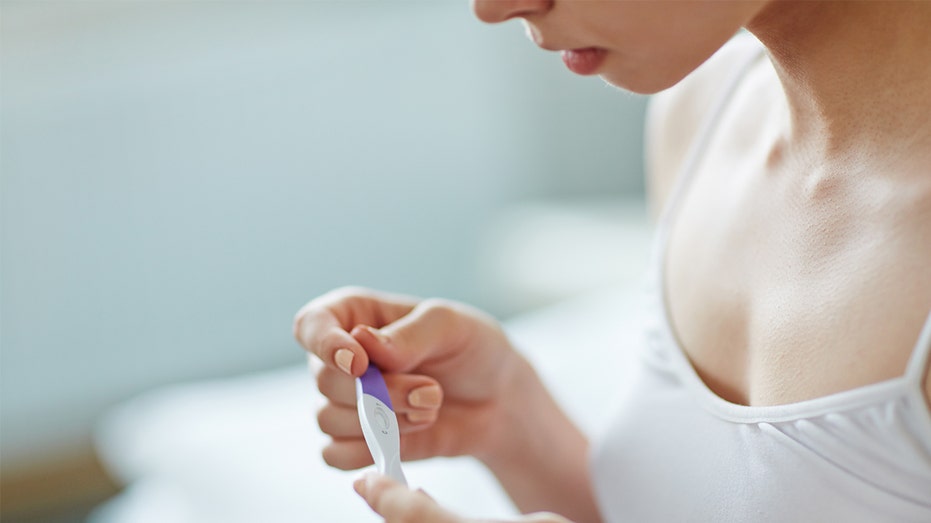
Los Angeles County Republican Party Chair Roxanne Hoge, a mother of four, told Fox News Digital that uncertainty over whether a pregnancy will remain viable does not change whether a woman is pregnant.
"As a mother of four and an actual biological woman, I must applaud the author for noticing that women do, in fact, make babies," she said. "While I sympathize with her on the very sad reality of carrying a pregnancy after a loss, this was a lot of words to try and pretend that a fetus is a clump of cells. You're either pregnant or you're not."
Elizabeth Barcohana, America First Policy Institute California ambassador to the America First Women's initiative, said the distinction should be between the existence of a pregnancy and whether a woman knows that pregnancy is viable.
"A woman cannot be 'a little bit pregnant.' Pregnancy is a physical, biological state that begins when a fertilized embryo implants in the uterus and triggers a chemical hormonal reaction," Barcohana said Thursday in a statement to Fox News Digital. "This article is not about being pregnant. It is about a woman's experience about knowing whether she is carrying a viable healthy pregnancy."
Tadepalli described testing positive during five pregnancies and spending periods of those pregnancies unsure whether she would miscarry. She said those experiences affected her ability to emotionally embrace her current pregnancy, with much of the essay examining what early testing can and cannot tell women about what will happen next.
Lisa Cusack, president of the Don't L.A. My Burbank PAC, told Fox News Digital she viewed the article's framing as an attempt to make pregnancy more subjective while arguing that uncertainty in early testing does not change whether a woman is pregnant.
"Women have always known that early pregnancies sometimes don't take or show up on tests, but that doesn't change the fact that you're either pregnant or not, whether you know it or not or want it or not."
Barcohana said that element of the essay was relatable to women who have experienced pregnancy loss and blamed The New Yorker's presentation for shifting attention away from it.
"The New Yorker's editors betrayed the author with this provocative headline, because what she's really talking about - in a vulnerable way that millions of women can empathize with - is the utility and impact on women of unreliable early testing," she said. "She tried to talk about something totally legitimate for women trying to start a family, and they [editors] hijacked it."
The distinction between detecting pregnancy and determining whether it is viable is also reflected in medical guidance. The Food and Drug Administration says at-home pregnancy tests detect human chorionic gonadotropin, or hCG, a hormone produced after a fertilized egg is attached to the uterine wall. The agency notes that testing too early can produce inaccurate results and that a positive home test does not provide information about how a pregnancy will develop.
you may also like


travel
- by foxnews
- descember 09, 2016
Lost city where Jesus performed miracles has finally been identified, expert says
Bethsaida, the home of Apostle Peter and the setting of Jesus Christ's miracles, may finally be identified after a decade of archaeology work at El-Araj.
read more