- by foxnews
- 05 Aug 2026
Alarming missile report draws forceful response from Trump as Iran war tests America's arsenal
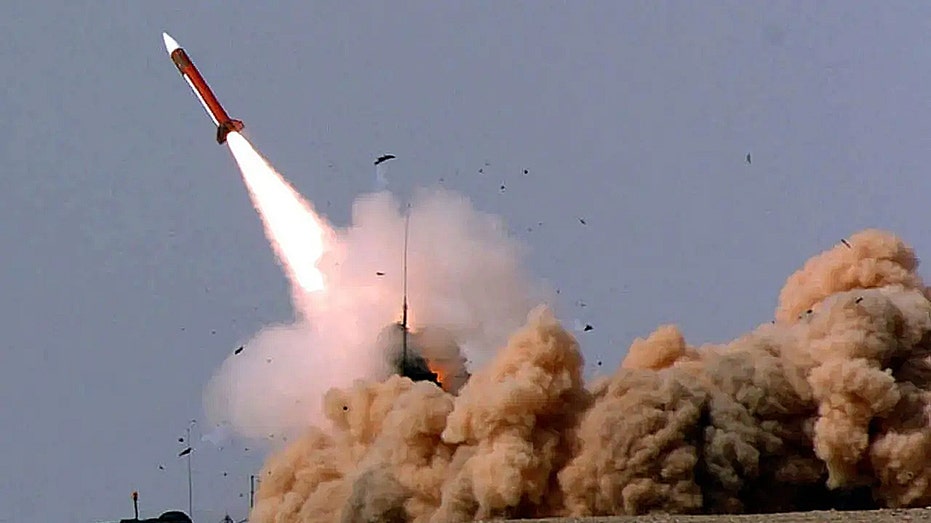
A report says the Army has burned through virtually all ATACMS and PrSM stocks during the Iran conflict, raising fears about future crises.
"Our defense companies are, at this moment, making more munitions than they have ever made before, in addition to expanding their plants and equipment at record levels. And as we build up, we will start issuing more to our allies in Europe and elsewhere."
If accurate, the report underscores a longstanding Pentagon concern: America's most sophisticated precision weapons can be expended in months but often take years to replace.
Reuters also reported that the conflict significantly reduced inventories of Patriot and THAAD missile interceptors, along with Tomahawk cruise missiles, though the Pentagon has maintained the U.S. military retains the capabilities needed to carry out operations worldwide.
Exact U.S. weapons stockpile figures remain classified for national security reasons.
The Pentagon also pushed back on the reporting. "America's military is the most powerful in the world and has everything it needs to execute at the time and place of the President's choosing. We have executed multiple successful operations across combatant commands while ensuring the U.S. military possesses a deep arsenal of capabilities to protect our people and our interests," chief spokesman Sean Parnell said in a statement.
ATACMS and the newer Precision Strike Missile are among the Army's premier long-range precision strike weapons, capable of striking targets hundreds of miles away without putting pilots in harm's way.
Military planners consider them particularly valuable against heavily defended adversaries because they can destroy command posts, air defenses, logistics hubs and other high-value targets from beyond many enemy air-defense systems.
The report comes as Pentagon leaders have increasingly warned about the challenge of sustaining prolonged, high-intensity conflicts against major powers while replenishing advanced weapons consumed in combat.
That concern has accelerated efforts to pair expensive precision missiles with far larger numbers of lower-cost, "attritable" drones and autonomous systems that can be produced rapidly and fielded at scale. Officials argue the approach would allow commanders to reserve million-dollar precision weapons for the highest-value targets while relying on less expensive systems for surveillance, electronic warfare and many strike missions.
Military leaders caution, however, that inexpensive drones are not a replacement for long-range precision missiles such as ATACMS and PrSM. Those weapons remain essential for striking hardened command centers, air-defense batteries and other heavily defended targets at distances many lower-cost drones cannot yet reach or survive.
Trump has met repeatedly with executives from the nation's largest defense contractors, pressing them to accelerate production and expand manufacturing capacity as conflicts in Iran and Ukraine strain U.S. stockpiles.
Following a White House meeting in March, Trump said the companies had agreed to quadruple production of what he called "Exquisite Class Weaponry," including some of the military's most advanced missile systems. At a second meeting in June and again at a defense summit in July, the president urged industry leaders to move faster, telling executives, "We have the best quality in the world, but we need a little more speed."
The production push is also reflected in the administration's budget priorities. Trump's proposed $1.5 trillion defense budget would more than triple spending on drones and autonomous systems while boosting investment in munitions production, missile defense and Tomahawk cruise missile procurement.
you may also like


- by foxnews
- 05 Aug 2026
Battlefield robots open new front in innovation war with major US adversary

- by foxnews
- 05 Aug 2026
Reporter's Notebook: Inside the Senate showdown over Trump's push to scrap August recess




travel
- by foxnews
- descember 09, 2016
Thousands swarm stunning mountain escape as selfie tourism backlash erupts online
Photos are showing massive shuttle lines at Tre Cime di Lavaredo in Italy as selfie tourism overwhelms one of the Dolomites' most iconic destinations for travelers.
read more