- by foxnews
- 06 Oct 2026
Supreme Court begins new term with high-profile look at clean air and federal authority
The Supreme Court heard arguments on whether Boulder County's climate lawsuit against Suncor and ExxonMobil belongs in state or federal court.
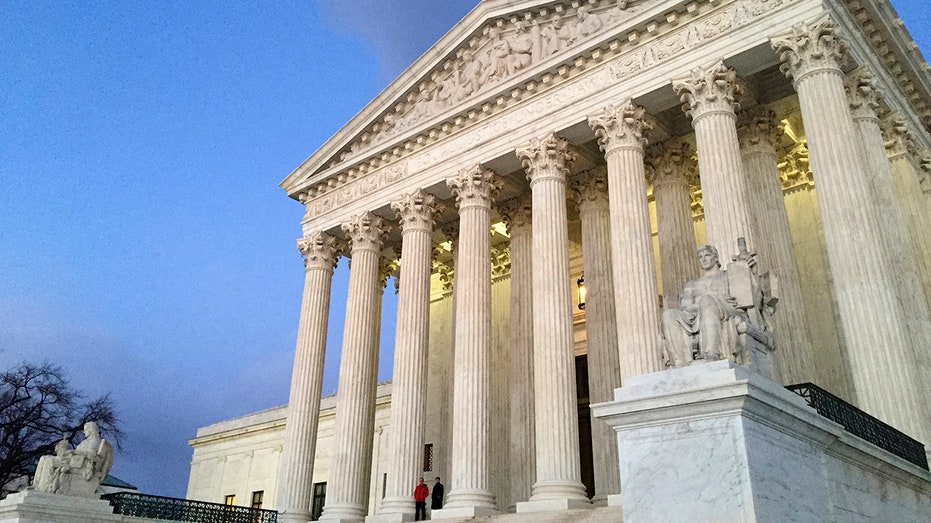
Absent was Justice Samuel Alito, who recused last week after calls to step aside because he owns stock in oil companies, but not the two at the center of Monday's appeal.
Local and state governments seek civil damages totaling billions of dollars, arguing it is necessary to help pay for rebuilding after wildfires, rising sea levels, and severe storms worsened by fossil fuel pollution.
Colorado's highest court let the case brought by Boulder County proceed.
The companies - backed by the Trump administration - counter emissions are a national issue that should be heard in federal court, where similar suits have been tossed out.
The justices will also decide whether they have jurisdiction to hear this dispute, or whether it belongs in state courts.
That would mean the specific lawsuit moves ahead in state courts. He said the court in the past has allowed similar claims to be decided outside the federal venue.
"There are a lot of familiar situations where conduct outside of the state has broad effects among other states, and yet we allow state courts in a particular state to bring litigation," said Roberts. "I guess I'm not quite sure what makes this situation different from all those other ones, where we've allowed them to proceed in state court."
"This is the same kind of lawsuit against the same kind of actors for the same kind of harm," said Kagan. "Where does this principle come from, that states can't regulate in the air and water space?"
" It is going to bankrupt - if there are enough of these [lawsuits] - bankrupt these various defendants and certainly other defendants out there. Anyone is a potential defendant for a suit like this. Any manufacturer, any business," suggested Kavanaugh.
The current litigation is part of dozens of lawsuits brought by states and municipalities across the country.
Boulder County, located north-west of Denver, sued in 2018.
Among the defendants is Suncor, a Canadian-based energy giant that operates the only major oil refinery in Colorado. ExxonMobil, the largest oil company in the U.S., is also a defendant.
Local officials claim the energy firms have misled the public about their role in climate change, and say financial penalties are necessary to mitigate ongoing harms in their communities, including recent forest fires and worsening air pollution.
Some states also accuse the current administration of rolling back mandated protections in the Clean Air Act and thereby abdicating their regulatory authority.
They say this global problem is not limited to any one energy sector or country, and cannot be resolved by what they call local "power grabs."
Some litigators believe the companies could fare better in federal court since they would not have to juggle dozens of ongoing lawsuits in multiple jurisdictions.
"Interstate air pollution is an inherently federal area," Sarah Harris, a Justice Department lawyer, told the court. "This suit egregiously exceeds constitutional limits on state authority," Harris told the justices.
With the possibility of an evenly divided court, the eight justices may not have to reach the merits of the federalism question.
The Supreme Court specifically asked both parties to address at argument whether it should even hear the case, at least at this stage. That procedural "exit ramp" could put the larger issues off for another day.
"I understand that you have several other federal issues that you have raised that are still pending in the state court," Justice Ketanji Brown Jackson asked the oil companies lawyer Kannon Shanmugam. "So why shouldn't we wait and hear all of these claims once the state courts are done with their federal considerations?"
The case is Suncor Energy Inc. v. Commissioners of Boulder County, CO (25-170).
A decision is expected by next spring.
you may also like


- by foxnews
- 06 Oct 2026
Rahm Emanuel urges Dems not to impeach Trump if they win the House




travel
- by foxnews
- descember 09, 2016
Woman's routine Uber ride takes alarming turn after her driver misses the exit
A viral TikTok video describes an Uber passenger's 3 a.m. ride turning alarming when her driver asked to stop at a parking garage to charge his EV. Experts weigh in.
read more