- by foxnews
- 21 Mar 2026
Transactional partners: How 200-year distrust shapes Russia's response to the Iran conflict
From rivalry to military cooperation, the Russia-Iran relationship remains transactional. How Ukraine changed their strategic partnership dynamics.
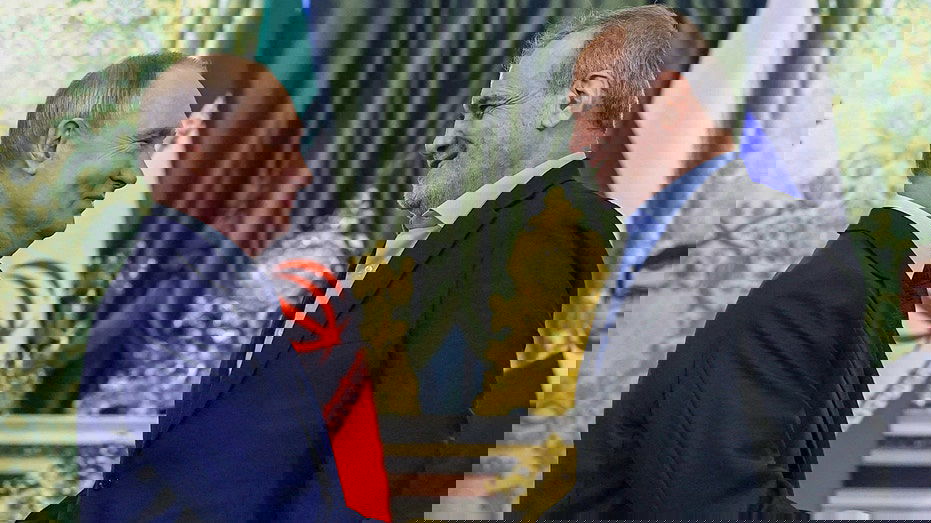
Kremlin spokesman Dmitry Peskov confirmed that Russia had received no request from Iran for military assistance.
"The relationship has always been transactional," said Ksenia Svetlova, executive director of the Regional Organization for Peace, Economy and Security (ROPES) and an associate fellow at Chatham House. "Russia does what serves its own interests."
While Iran and Russia have moved closer in recent years - particularly after Moscow's 2022 invasion of Ukraine - experts say the partnership has never resembled a true alliance. Instead, they say, it reflects a long history of cooperation shaped by convenience, rivalry and shifting geopolitical needs.
In the 20th century, Russia's relationship with Iran shifted dramatically. Before the 1979 Islamic Revolution, Moscow maintained relatively stable ties with Iran under Shah Mohammad Reza Pahlavi.
"It actually had good relations with the Shah who visited Moscow after World War II," Svetlova said.
"But Communist Russia was very suspicious of Islamist Iran after the 1979 revolution," said Svetlova.
It was a mutual distrust. Ayatollah Ruhollah Khomeini denounced both Cold War superpowers, calling the United States the "Great Satan" and the Soviet Union the "Lesser Satan."
Even during the Iran-Iraq War of the 1980s, the Soviet Union maintained ties with Tehran while simultaneously supplying weapons to Iraq.
"The Soviet Union was very suspicious of Islamist Iran," Svetlova said. "Even after the revolution, the relationship could not really be considered an alliance."
In recent years, however, geopolitical pressures pushed the two countries closer together. Russia's full-scale invasion of Ukraine in 2022 created new military cooperation between Moscow and Tehran.
Though Russia and Iran have not shared a land border since the 1991 collapse of the Soviet Union, they remain "neighbors" via the Caspian Sea. This "blue border" became a vital artery in 2022 when Iran supplied the Shahed-series drones used in Ukraine that Russia has used extensively in attacks on Ukrainian infrastructure.
Vice Adm. Robert S. Harward, a retired Navy SEAL and former deputy commander of U.S. Central Command, said the partnership has had direct consequences on the battlefield.
Carrie Filipetti, executive director of the Vandenberg Coalition and a former deputy assistant secretary of state, argued that Russia's continued use of Iranian drones against Ukrainian targets underscores the depth of the military relationship while its calls for restraint in the current conflict highlight a fundamental contradiction.
"If Russia were serious about peace, we would see a ceasefire with Ukraine months ago," she said. "Yet, Putin continues to attack Ukrainian cities, churches and civilians with Iranian drones day after day."
Harward argued that confronting this growing cooperation requires a broader strategy.
Filipetti remains skeptical of Moscow's role as a mediator.
Although Russia is falling short of helping Iran in a straightforward military way, experts say the cooperation in the world of intelligence has been profound.
"Putin only does what serves Putin, and right now escalating the war in the Middle East and driving up oil prices only serves his interests so he can continue to fund his war machine against Ukraine," he said.
you may also like


- by foxnews
- 21 Mar 2026
HBO medical drama targets ICE in controversial new hospital storyline

- by foxnews
- 21 Mar 2026
Kentucky survives Santa Clara in overtime thriller after Otega Oweh's miracle buzzer-beater

travel
- by foxnews
- descember 09, 2016
Major city hikes hotel tax to nearly 20% as tourism bosses eye future events
Chicago has raised the tourist tax on downtown hotels to 19% to boost tourism marketing efforts. A new district will fund Choose Chicago campaigns and events.
read more